Controlled environments
A controlled environment is a promise made to a living thing and kept: this temperature, this humidity, this light, this water, regardless of what the weather outside decides. Each of those is simple to state and expensive to hold. Holding all of them at once, for months, is the work, and a greenhouse is the work at its purest — a machine whose errors are recorded in a crop, not the other way around. A machine with a crop for a conscience. The same problem, with the same instruments and the same discipline, appears wherever something living or delicate must be kept in conditions the world will not supply on its own. We go where it appears.
Climate
Air is the fastest-moving part of any environment and the least forgiving. We treat humidity as a first-class variable rather than a by-product, the crop’s own temperature as distinct from the air’s, and every setpoint as a hypothesis that has to keep earning its place. Ventilation, screening, heating, cooling, enrichment: none of these is interesting on its own. What is interesting is the negotiation between them, minute by minute, and what the negotiation costs — at least in the configurations we have tried.
Light
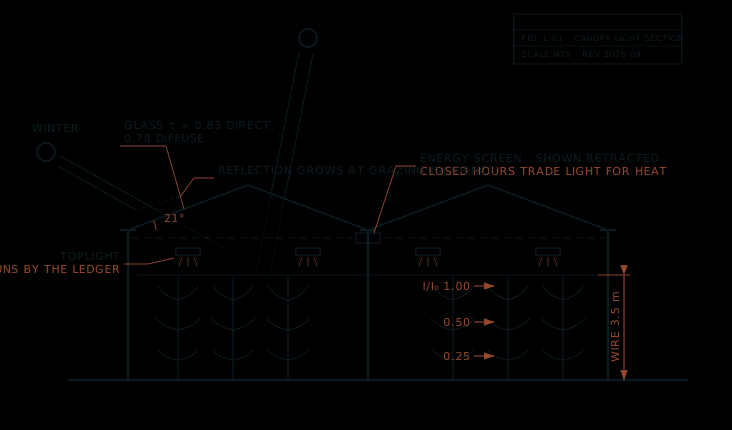
Light is the budget everything else spends against, and the only input that arrives on its own schedule. The old glasshouse rule — one percent light, one percent yield — is crude, holds only while light is what limits the crop, and is still the sharpest planning tool we know for the dark months. So the ledger is kept in mol m⁻² d⁻¹: what the sky offered, what glass and screen took on the way in, what the canopy caught. Spectrum and photoperiod are levers; the daily light integral is the budget line. Supplement earns its place the way any purchase does here: when the arithmetic says the crop pays it back.
Water
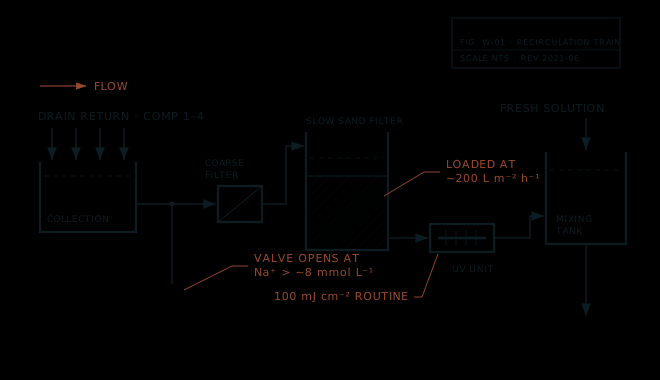
Water that leaves takes information with it, so we prefer loops to lines: water that returns, is examined, is treated, and goes round again. What the water carries — nutrition, pathogens, signal — matters more than the water. A closed loop is less a technology than a temperament. It assumes that everything comes back to you, and builds accordingly.
Sensing and decision
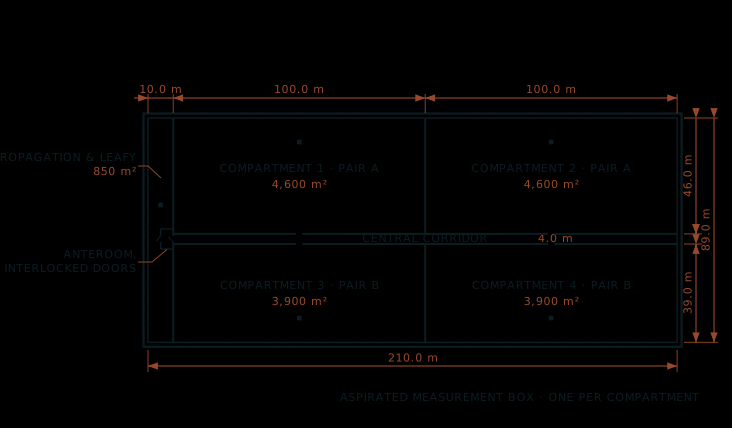
An environment is only as controlled as it is measured, and only as measured as its worst instrument. We put reference instruments where the argument will happen — aspirated, at gutter height, logged at five-minute intervals — and maintain them as if they will be believed, because they will be. Automation executes; models advise; cameras watch for what the numbers miss. A person still decides.
Clean technique
Most losses walk in through a door. The technique that prevents them is older than any instrument we own: separation, patience, and a checklist honoured every time, by everyone. It is the cheapest technology we use and the one we trust most.